Tuesday, 15 November 2011

ika tako virus-be careful!


It’s one thing to get a virus like Trojan or a worm and lose all your files, but its another to get a virus that replaces all your files with anime sea creatures. I guess the hacker thought it would be funny. For those that don’t know, Ika-tako is Japanese for squid-octopus. Since May, it has infected anywhere between 20,000 and 50,000 computers, according to Asahi.com. The virus is usually disguised as music files, which many people download. When the file is played, the malware then spreads through the entire hard drive infecting all files. The infected files are then switched out with the sea creature pictures and sent to the hacker’s server. 
The virus disguises itself in music files, which users then download. Once the file is played, the malware runs through the computer’s hard drive, infecting anything from family photos to important OS files. The infected files are swapped with the squid, octopus or sea urchin pictures and removed, then supposedly sent to the hacker's  server.

The good news is that the hacker, Masato Nakatsuji, was found and arrested. It’s not the first time this guy has been arrested for malware creation either--he was convicted for crafting a similar virus back in 2008, but had used images from the copyrighted anime cartoon Clannad. He reportedly told police this time that he wanted to see “how much my computer programming skills had improved since the last time I was arrested.”

This time, he was arrested on the grounds of property destruction, a first for police in Tokyo. At least he handmade the images himself this time I guess.

Unfortunately there is no known fix for the virus just yet, so bad news for those already infected, unless police can get into the server he set up. However, considering he had thousands of people’s information stored on the server, it shouts to me that there was a bigger motive behind this virus that just practicing his computer skills.

Sunday, 13 November 2011

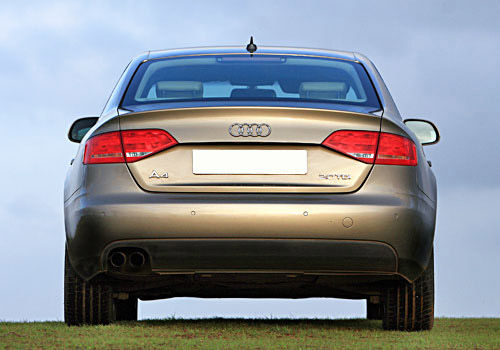
hye2 sume....ermmm hari ni aku nak bercerita pasal kereta idaman aku...AUDI A4..hoho ske gler aku ngan kete ni..mula2 aku x kenal ngan kete ni.memang aku x penah dengo pn namenye tapi sejak2 member aku story mory pasal audi ni aku pun da mula jatuh cinta ah..haha..jom tengok ape yang best sangat kat audi ni..

ok first jom tengok  ckt rupa bentuk audi a4..

Audi A4 - Full Rear View Exterior Photo


ahhh teruja nya aku tengok...(^_^)..
kereta brand audi da di produce since 1994 lagi by German car manufacturer Audi. dulu syarikat Audi ni pernah la mengalami kemerosotan ermm mase kira2 2 dekad yang lalu..tapi dengan terhasilnya Audi A4 ni so so jenama Audi ni hidup balik la..best jugak ciri2 yang ada pada Audi ni antaranya dari segi pengendalian dye yang tajam, penghasilan kete ni menggunakan bahan2 yang berkualiti tinggi, tempat duduk dye selesa menjadikan perjalanan yang ok n best..

yang aku suka kat Audi ni sbb dye smart der..hehe..let's see..

Friday, 11 November 2011

about steve jobs..


Steven Paul Jobs was born in San Francisco, California on February 24 1955. His biological parents, unwed college graduates Joanne Simpson and Abdulfattah Jandali, had him adopted by a lower-middle-class couple from south of the Bay Area, Paul and Clara Jobs.


Young Steve grew up in a valley of apricot orchards that was already turning into the world center of computer technology: Silicon Valley. It was not uncommon to see engineers fill their garages with all kind of electronic devices in that part of California. Steve Jobs was fascinated by these, and that’s why, in 1969, he met with a computer whiz kid who shared his interests in electronics: Stephen Wozniak — commonly known as Woz. Steve and Woz quickly became friends even though Woz was five years older.

When Steve Jobs reached college age, he decided he would go to Reed College in Oregon. It was an expensive liberal arts college, way too pricey for his modest parents; but they had to keep their
promise to Steve’s biological mother, and therefore paid for the tuition. Steve only stayed at Reed for one semester though, after which he dropped out. He then spent a lot of time learning about Eastern mysticism and adopted strange diets, fasting or eating only fruits: it was his hippie period. He even traveled to India with a friend to seek enlightenment at age 19.
After Steve came back to the Valley, he focused on Woz’s work on a computer board. Woz was attending a group of early personal computer hobbyists called the Homebrew Computer Club, 


where he got the idea of designing his own computer (which consisted only of a circuit board at the time). Steve Jobs saw that many people were interested in his friend’s brilliant work: he suggested they sell the board to them. Apple Computer was born.

Apple’s first year in business consisted of assembling the boards in Steve’s garage and driving to local computer stores to try and sell them. Meanwhile, Woz worked on a new, much improved computer, the Apple II, which he basically finished in 1977. Both Woz and Steve knew the Apple II was a breakthrough computer, much more advanced than anything the market had ever seen. That’s why Steve set out to find venture capitalists to fund Apple’s expansion. After a while, he made a deal with Mike Markkula, an enthusiastic former Intel executive who invested $250,000 in their business and assured them their company would enter the Fortune 500 list in less than two years.

Mike was right. The Apple II soon b
ecame the symbol of the personal computing revolution worldwide. It crushed all competition both because of its breakthrough hardware features (including its color graphics) and its very large supply of compatible software. 


The key to Apple II’s success was actually VisiCalc, the first spreadsheet program ever brought to market. Thousands of people bought Apple IIs just to use it. As a result, the company grew at a very fast rate, and went public after just four years of existence, in December 1980. Steve Jobs’ net worth passed the $200 million mark on that day — he was only 25.
But Apple’s success was threatened, as industry giant IBM was planning to enter the personal computer market in 1981. Apple had to fight back or they would go out of business in a couple of years’ time. Their Apple III computer had already bombed on the marketplace. They focused all their energy on a project headed by Steve Jobs: Lisa. He had named it after his ex-girlfriend’s daughter, although he denied all paternity (that difficult situation actually caused him to miss Time Magazine’s Man of the Year 1982). The Lisa computer was a breakthrough because it used a graphical user interface instead of a command-line interface. This technology, like many others that would revolutionize computing, was invented at Xerox PARC — but Apple was the first company to bring it to market.


apple II 

Yet Steve Jobs was soon thrown out of the Lisa project because he was considered too temperamental a manager. Deeply angry, he took revenge by taking over a small project called Macintosh, determined to make it a cheaper GUI computer that would cannibalize sales of Lisa. Macintosh was in development since 1979 and its concept was “a computer as easy to use as a toaster.” Steve Jobs recruited brilliant young engineers in his Mac team and invigorated them by insufflating a spirit of entrepreneurship and rebellion, calling them “pirates”, unlike the rest of the company, “the Navy.”

Even though the Mac project was controversial as it threatened both Apple II and Lisa, and because Steve Jobs antagonized it against the rest of the company, it soon became crucial to Apple’s future because Lisa proved yet another market failure. Steve was supported in his mission by John Sculley, Apple’s CEO, whom he hired in 1983 to help him run the company and groom him into a top executive. In January 1984, he introduced Macintosh in great fanfare.

Although Mac’s first months were encouraging, sales soon started to plummet. There was growing fear in the company that this third flop in a row would put Apple out of business. Besides, Steve Jobs’ continued arrogance drove everyone nuts, starting with CEO John Sculley. After a failed 
board coup initiated by Jobs in mid-1985, Sculley announced he and the directors had agreed on a new org chart for Apple, in which Steve had no managerial duties whatsoever. He was only to remain chairman of the board.
Apple founder Steve Jobs introduces the Apple II in 1977, the first computer with a keyboard and color screen.
STEVE JOBS 1977

Steve was stunned. Apple was his life, and he was kicked out of it. He started traveling around looking for new ways to spend his energy. It was actually in that second half of 1985 that he was introduced to a small team of brilliant computer graphics experts that George Lucas was trying to sell. They all shared a common dream of making animated movies with computers. Steve was interested and he eventually bought the company for $10 million in 1986, incorporating it as Pixar.

Yet his main passion was still to make great computers. In September 1985, he announced to the Apple board that he was going to found a new company, called NeXT, to build an advanced computer for higher education and scientific research. He was going to take with him some of the best engineers and salesmen from the Mac team. Apple disapproved and threatened to sue him. It was at that point that Steve left his company for good and sold almost all of his stock in disgust.

NeXT started work on its computer in early 1986, after Apple dropped its lawsuit. Steve aimed at the highest possible standards for his new machine: he wanted the best hardware, built in the world’s most automated factory, and running the most advanced software possible. He decided the computer’s operating system, NeXTSTEP, would be based on UNIX, the most robust and most complex system in the world — but that it would also be as easy to use as a Macintosh, thanks to its own graphical user interface. In addition, it would make software development real easy with its object-oriented programming technology. These ambitious plans put off the release date of the computer — called the NeXT Cube — to October 1988.

However great it was, the NeXT Cube didn’t sell. It was overpriced and missing useful software. NeXT struggled for years to sell it, expanding its target from just education to businesses, and introducing a cheaper box, the NeXT Station. Yet the number of computers they sold each month remained in the hundreds. The company was bleeding money and all its co-founders left one after the other, as well as its first outside investor, Texan billionaire Ross Perot. By 1993, NeXT had to give up its hardware business and focus only on promoting its advanced software technology. NeXT Software, far from beating Apple, had turned into a niche software development business. Steve was devastated.

In addition, his investment in Pixar also seemed to lead nowhere. The small company had tried to sell advanced graphic workstations to specialized markets since it had been founded, without success. Jobs shut down Pixar’s hardware operations in 1990, decided to focus on developing an advanced 3D language called RenderMan. He kept the animation division, headed by John Lasseter, only because its work on TV commercials were one of the company’s only source of revenues. Hope was brought by a contract with Disney to make a full feature film with computers in 1991. But by the end of 1993, the contract was canceled by Burbank. With both his ventures failing, Steve had reached the nadir of his career. He spent most of his days at home with his young son Reed and his wife Laurene, whom he had married in 1991.

The iPod revolution (2001-2006)
the greatest momentum for Apple came from an unexpected source: the iPod. iPod was an integral part of the digital hub strategy. It was started in early 2001, when Steve Jobs realized that he had misplaced his enthusiasm for “desktop video”, i.e. the ability to edit movies on the computer — which was still far from mainstream. What was really hot at the turn of the century was not movies but digital music, as exemplified by the success of Napster. He focused on catching up and bought an outside hardware developer to work on Apple’s own MP3 player, which was brought to market in record time, just in time for 2001’s holiday season.

iPod’s breakthrough features — its beautiful design, its brilliant user interface and click wheel, its fast FireWire connectivity and its ability to sync with iTunes seamlessly — made it a hot seller from the start. For the first time, people were buying Macs just so they could use this little music player the size of a cigarette box. Apple cashed in on that success and went further in the following years, first by making iPod Windows-compatible in 2002, then by opening the iTunes Music Store and developing a Windows version of iTunes in 2003.

As of 2006, after Apple had continually pushed innovation in its music business by introducing iPod mini in 2004, iPod shuffle then iPod nano in 2005, and expanded its Music Store internationally, it had become the undisputed leader of the new digital music era. A significant landmark was passed in 2006 when Apple’s revenues from iPod equaled those made on computers. For the first time in its history, the firm from Cupertino had left its niche markets to become as influential a player in consumer electronics as Microsoft was in the PC space. iPod’s market share was close to 75%!


Apple Inc. (2006-today)
The second crucial development from 2006 was the full acceptance by Apple of its new status of consumer electronics powerhouse, the success of iPod, the walkman of the digital age became obvious in February 2006, when the company released iPod hi-fi, a boom-box designed to work only with iPod (which was discontinued the following year), and Apple TV less than a year later. But the biggest move of course came in January 2007, when Steve Jobs introduced iPhone at Macworld. iPhone was arguably the ultimate Apple product. Its beautiful hardware ran no less than Apple’s full operating system, OS X. Its multi-touch technology, Web surfing and iPod capabilities, easy-to-use interface, and more, made it a smartphone “light-years ahead of its competition”, as Steve Jobs said. It shook the phone industry to its core, down to the exclusive deal that Apple cut with AT&T for subscription plans. Three years after it was introduced, it is already fair to say that iPhone will go down in history as the first digital convergence device, equivalent to putting a computer, an iPod and a phone in your pocket. It was such an obvious part of Apple’s move outside the PC business that Steve announced at the end of Macworld 2007 that the company’s name would be changed from Apple Computer Inc. to Apple Inc.

Finally, the third major event of 2006 for Steve was the so-called backdating scandal. Backdating consists of picking a date in the past, when a stock's value is lower, to assign the exercise price of options. It is an illegal practice that was commonplace in Silicon Valley until it was exposed by a Wall Street Journal article in 2006. Apple swiftly hired lawyers to lead an internal investigation of its own records. They did find irregularities, which were confirmed by the SEC in mid-2007. Two big frauds were unveiled that took place in 2000 and 2001, under Steve Jobs’ leadership. However he was cleared the following year as the SEC found out he had no idea of the legal or accounting implications of the matter. The SEC only charged Apple’s former CFO and legal counsel with fraud. The scandal was significant in the sense that it raised the issue of Apple’s future without Steve Jobs... But the main occasion this issue was raised was not the SEC investigation, it was unfortunately after Steve’s health problems.

In late 2003, Steve was diagnosed with pancreatic cancer. Fortunately, his tumor was not of the deadly type: Steve would be saved if he agreed to have surgery. But he didn’t, and for nine long months, followed a special type of diet that he thought would cure him from the disease. It was only in August 2004 that he agreed to have the surgery. Everybody thought the troubles were over, as he claimed he was “cured”. Of course there is no such thing as being cured from cancer, and in 2008, people started commenting heavily on Steve’s being increasingly thinner. Although he and Apple kept on denying any serious problem, in December 2008, they announced to everyone’s surprise that the CEO would not go on stage for the last Macworld keynote in history in January 2009. Steve Jobs took six months off (the first half of 2009), as he was awaiting a liver transplant — which he got in April 2009. The whole story of Steve’s cancer raised many a discussion about a public company’s necessary transparency regarding its CEO’s health, especially when that CEO is as essential to its market value as Steve Jobs is to Apple’s.

2010 has seen the incredible rebirth of Steve Jobs as a very active CEO. In sharp contrast with 2009, he came back on stage for many Apple events that year, and surprised the world many times over with insanely great new Apple products. The biggest announcement of all was undeniably iPad, Apple’s iOS-based tablet, which Steve unveiled on January 27, 2010. At the industry conference D8 in June 2010, Steve Jobs clearly stated that in his opinion, iPad had started the post-PC era, and that PCs would eventually become “like trucks”, a marginal part of a market dominated by portable tablets... If this comes true, this one man Steve Jobs will have played a crucial part in both giving birth and putting an end to the personal computer industry.

Thursday, 10 November 2011

iPhone 4 glass strength

teknologi masa kini yang semakin berkembang maju..pelbagai jenis handphone dicipta..dan masing2 mempunyai ciri2 nya yang tersendiri...bagi iphone 4 ciri kekuatannya memang terbukti..let's see this...


                                    I would trade all of my technology
                                      for an afternoon with Socrates.
                                                                   – Steve Jobs

how does technology impact the world

 
   time passes quickly. the information technology 100 years old and it seems incredible that, before his foray into the lives of human beings could manage without them.


it is very interesting to discover how the top executives of companies such as IBM suggests  that the challenges posed to humanity to address the impact of technology today, have nothing to do with microprocessors, or with services in the cloud or with mobile applications.


are aimed, instead, to issues more related to people: to facilitate the connection of the subsystems that exist in the world and maintain social stability and economic development, ensure security and data privacy personal and transform the leadership to make it an exercise in creativity, listening, collaboration and influence. will technologist become more sensitive? or maybe the machines increasingly resemble people?

Wednesday, 9 November 2011

andai itu takdirnya...


     tu tajuk novel sebenarnya...mase study week sem lepas aku baca novel ni..ingat nak baca sikit je..sekali da baca hah! terus x ley lepas da.hehe..nak kata aku ni pencinta novel x la jugak..tapi ntah kenapa masa tu hati ni teringin plak nak baca...korang2 kalau ada kelapangan ce la baca novel ni..memang menyayat hati..dalam banyak2 novel yang aku baca b4 ni, novel ni la yang betul da berjaya wat aku nangis x benti2..klako pulak bila ingat2 balik..hehe...at bawah ni cover page dye...


Jom baca sinopsis novel ni..(^_^)

perkahwinan yang tidak terduga antara Aleya dan Syed Aizril membuatkan Aleya hidup terseksa. Dia dibuang keluarga..pasrahkah dia?

Aleya, seorang gadis yang cantik dan berlatarbelakangkan keluarga sederhana, dalam diam menyimpan perasaan pada seorang anak tokoh korporat yang ternama yang juga merupakan rakan sekuliahnya di Universiti di United Kingdom, Syed Adam Aizril. Syed Adam Aizril, wajahnya yang tampan menjadikan dia kegilaan ramai gadis. limpahan  kemewahan meletakkan ego dan kesombongan di singgahsana yang paling tinggi. Mentalitinya yang mementingkan darjat dan kedudukan telah menutup pintu hatinya untuk mendengar bicara hatinya sendiri yang pada ketika telah mula ada getaran Aleya.
"salahkah Leya mencari sedikit bahagia? mengapa Leya tak pernah dapat merasainya? hina sangatkah Leya sebab beribu dan berbapakan orang miskin? memang Leya miskin tapi Leya jugak ada maruah diri."
terjadinya suatu perkara yang menyatukan mereka. Tapi kerana terlalu ego, sombong dan mementingkan darjat, Aleya dilayan hina oleh Syed Aizril.

Untuk taw lagi isi2 dalam novel ni, korang beli la..baca berulang kali pun tetap best..tetap nak nangis jugak..huhu...novel ni memang tak boring. kalau ada 10 bintang, 10 jugak la yang aku bagi..harga dye ok je..RM 19.90, 588 pages..penulis dye Siti Rosmizah..(^_^) have a good reading!!


manusia memang begitu...

kenapa dengan manusia?
apa yang dah manusia lakukan?
kenapa itu kenapa ini?
banyaknye persoalan....

malam2 camni terasa nak cakap pasal manusia plak...
lumrah kehidupan sebagai manusia ni yang x pernah nak cukup dengan apa yang dah ada.
kalau kita dah ada yang itu, kita nak yang ini pulak..
hai manusia2...

kenapa ek manusia macam tu?
adakah sebab manusia ni tamak haloba? atau sekadar nak menunjuk kat orang yang kita ni mampu nak
memiliki semuanya?

semuanya ada pada diri sendiri..
semuanya bergantung pada niat sebenar kita..

memang betul yang kita ni kena penuhi maqasid syariah tapi kadang2 aku tengok orang2 yang banyak wet
ni kejap2 tukar kereta, kejap2 tukar rumah..pergh!! memang gila kaya ah orang tu..
tapi untuk apa semua tu? pada aku tu bukan memenuhi maqasid syariah da. tu lebih kepada menunjuk2..
saje je nak bagi orang lain jealous..geram jugak kadang2 bila tengok orang2 yang macam tu...
tapi aku suka tengok orang yang kaya tapi dye murah ngan senyuman..bila tengok orang yang macam tu baru lah rasa respect at dye..yela kan..da la kaya, muka manis jew selalu..haii senang hati tengok muke dye..

kita ni sebagai manusi perlu mempunyai sifat2 qanaah bukannya tamak...Allah S.W.T dah kurniakan kita dengan apa yang kita nak. so, kita sepatutnya kena bersyukur dan jangan la nak tamak2..Allah xsuka taw..sifat qanaah ni perlu ada dalam diri kita supaya ianya dapat menghalang sifat tamak, dengki, and semua yang xbaik tu daripada menguasai diri..

sebab sifat qanaah perlu ada dalam diri kita:

1) supaya umat islam tergolong dalam golongan orang2 yang berjaya dan dapat rezeki yang cukup.
2) supaya umat islam sentiasa bersemangat untk mencari rezeki yang halal tanpa rasa ragu dengan kemampuan yang dimiliki.
3) sifat qanaah dapat mendidik diri supaya sentiasa bersyukur kepada nikmat Allah.
4) supaya dapat mengikis sifat tamak haloba dalam usaha mencari dan memiliki harta serta pemberian Allah yang lainnya.
5) menerbitkan sifat tawakal kepada Allah dalam setiap tindakan kita.

Rasulullah S.A.W juga menegah umatnya daripada mempunyai sifat dengki dan iri hati sehingga sanggup menghalang rezeki orang lain.

sabda Rasulullah S.A.W yang bermaksud: "jauhi sifat dengki kerana dengki itu memakan segala amalan kebajikan seperti api yang memakan kayu bakar"

so, sebagai manusia ni kita kenalah jauh kan diri dari sifat2 yang x elok ni..bahaya taw..dengan sifat2 yang camni lah punca kita hilang member, hilang kerja, orang hilang kepercayaan at kita and semuanya nak hilang..fikir2 la..hidup tanpa perasaan dengki, tamak, iri hati dan sebagainya akan menjkadikan hidup kita lebih tenang, aman dan bahagia je taw....

sampai cni jew kot yang aku larat nak luahkan...esok2 sambung ag..xesok, lusa la..x lusa tulat dan begitulah seterusnya...(^_^)
 

.....saranghae.....(^_^). Design By: SkinCorner